
What Are the Most Common Structural Problems Found in Bell Helicopters
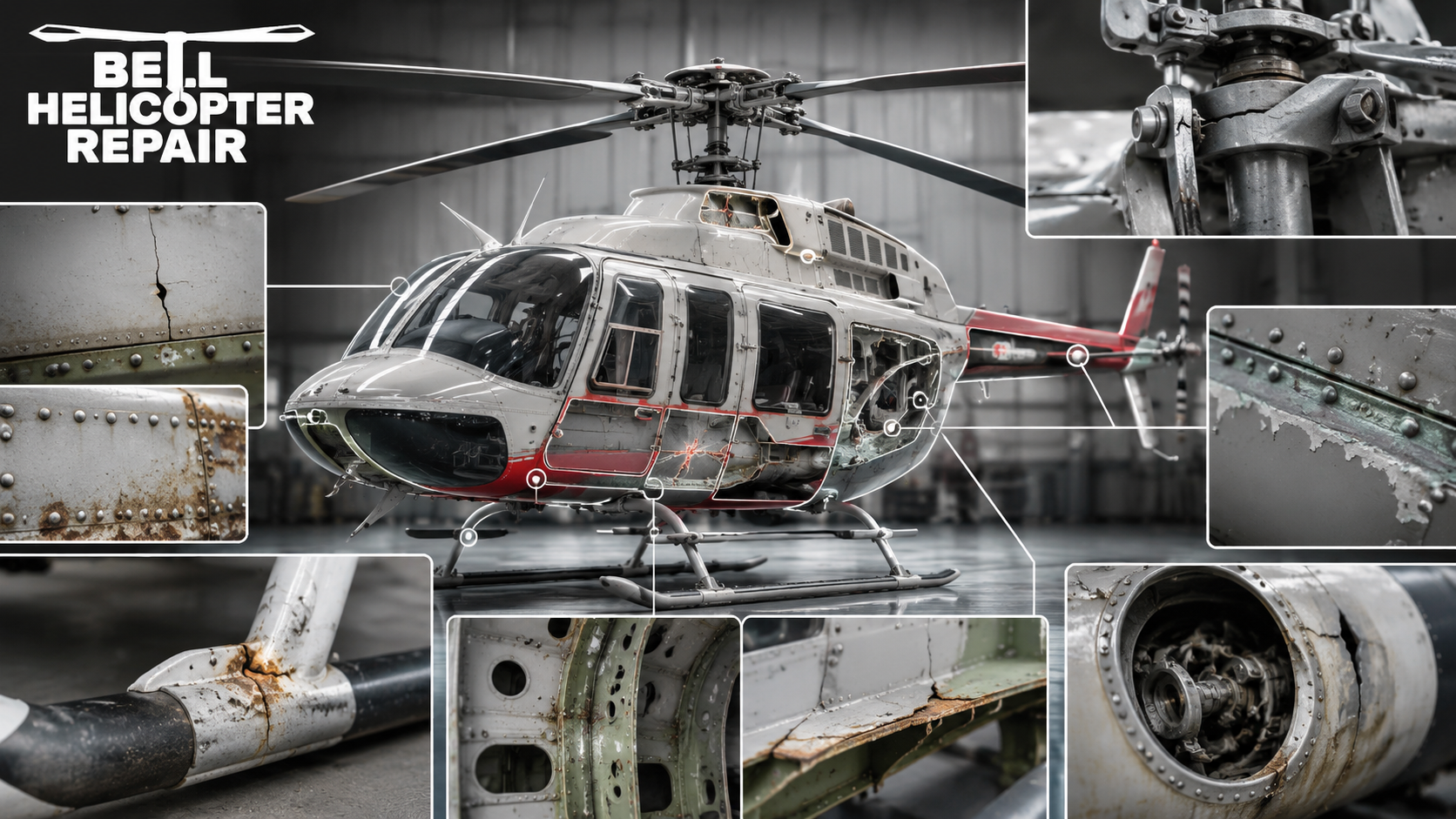
Summary: Bell helicopters operate in demanding environments where structural integrity plays a vital role in safety and reliability. This guide explains common structural issues, inspection priorities, and repair solutions while highlighting why Bell 206 tail boom fitting replacement and support from a qualified helicopter repairer help operators maintain dependable aircraft performance and extend service life.
Bell helicopters earn a strong reputation for durability, although every aircraft experiences structural wear throughout its service life. Flight loads, vibration, environmental exposure, and regular operations gradually affect critical components. Understanding common structural concerns helps owners and maintenance teams make informed decisions before minor damage develops into major repairs. Professional inspections, timely maintenance, and services such as Bell 206 tail boom fitting replacement contribute to safer operations. An experienced helicopter repairer also identifies hidden damage and recommends approved repair methods that protect both aircraft value and operational reliability.
Why Structural Health Matters?
Every structural component supports safe flight. Even a small crack or corrosion spot deserves attention because stress spreads across connected sections during operation. Regular inspections enable work maintenance staff to detect issues in time before neighboring structures are impacted.
Use of approved engineering procedures and manufacturers' maintenance instructions can also help maintain structure. Repairs conducted in a proper manner will lead to reduced downtime, reliable service, and a long service life.
Tail Boom Damage
There is constant vibration and aerodynamic loading on tail boom assemblies on all flights. Cracking around attachment points, bulkheads, and supporting structures is usually caused by hard landings, accidental impacts, and corrosion, as well as disuse and/or long service times.
Maintenance personnel should inspect these areas regularly because early repairs usually require less work than extensive structural restoration. Delayed action often increases repair time and operating costs.
Longeron Cracks
Where Bell helicopters consist of the parts of the fuselage, longerons are used throughout for structural support. Fatigue load will slowly cause cracking, especially on aircraft having high operating hours.
The longerons are visually checked for deformations, cracks, loose fastenings, or corrosion. Early replacement or approved repair will ensure the structural integrity and stop further damage from spreading into the adjoining parts.
Corrosion in Belly Sections
Corrosion remains among the most common structural concerns for helicopters operating in humid, coastal, agricultural, or industrial environments. Aluminum skins and support structures gradually deteriorate when they become wet and/or contaminated.
To minimize corrosion, wash frequently, put on protective coatings, and do periodic inspections. In the event of corrosion, aircraft are removed from service, and technicians wash away degraded areas and provide the required structural repairs prior to returning the plane to service under the guidance of the approved aircraft structural repair.
Firewall Cracks
Engine vibration and thermal cycling place continuous stress on firewall assemblies. Small cracks often appear around high-load locations and mounting points.
Crack growth is prevented by taking appropriate measures to repair the crack approved by the maintenance team, which may include reinforcement doublers and replacement sections. Prevents damage to adjacent structural components and keeps aircraft safe.
Honeycomb Panel Damage
Aeroplane weight can be minimized with the use of the honeycomb structure while allowing the design to achieve very good strength. Damage may occur on the structural level of the panels, but without the obvious signs on the surface, without moisture intrusion, impact, or improper handling.
Qualified technicians use specialized inspection methods to evaluate internal conditions before completing approved honeycomb repairs. Accurate assessment protects structural performance and prevents recurring issues.
Stabilizer and Support Structure Wear
During all flights, the horizontal and vertical stabilizers will always be subjected to aerodynamic forces. Possible impacts of foreign objects, corrosion, and fatigue start to occur at the leading edges, trailing edges, attachment points, and support structures over time.
Regular maintenance checks enable maintenance personnel to detect the damage at an early stage. Quick repairs means structure is restored the most effective and efficient way to help with flying stability without taking too much time to repair unnecessarily.
Door Frame and Cabin Structure Damage
Repeated door operation places constant stress on hinges, brackets, and surrounding structural members. Cabin door stiffeners also experience vibration throughout normal operations.
Technicians check for any cracks, loose screws, and distortion in these areas. Repairs are approved and restore structural alignment to minimize chances of fatigue damage.
Aircraft operators often schedule structural inspections alongside other maintenance events to minimize downtime. During these inspections, technicians evaluate surrounding assemblies and determine whether Bell 206 tail boom fitting replacement supports the aircraft's long term structural condition.
Why Early Detection Matters?
In most cases small structural defects do not stay just a single defect. Cracks grow over time under repeated loads from flights, and corrosion occurs under protective coatings. When damage occurs in a larger portion of the structures, then early identification helps the maintenance team to repair the damage in time.
Scheduled inspections also help operators to plan future maintenance, prevent upsets to the schedules, and aid in reducing the cost of the operation over the long term.
Best Practices for Preventing Structural Damage
Owners and operators have a proactive maintenance strategy. There are several practices that tend to promote a long period of structural health.
● Keeps to the manufacturer's recommended inspection schedule.
● Thoroughly clean aircraft after use in corrosive environments.
● Solve small cracks to prevent their growth.
● Cover exposed surfaces with the use of approved coatings.
● Report all repairs and inspections.
● Use the expertise of structural repair professionals.
These practices help to enhance maintenance planning and ensure uniformity of aircraft reliability.
Conclusion
Structural issues remain a normal part of long-term helicopter operation, although timely inspections and approved repairs greatly reduce safety risks and unnecessary downtime. Paying close attention to corrosion, longerons, firewalls, stabilizers, and attachment points allows operators to protect valuable aircraft investments. Services such as Bell 206 tail boom fitting replacement also play an important role in maintaining structural integrity throughout the aircraft's service life.
When your Bell helicopter requires professional structural repairs, trust Bell Helicopter Repair by Carl E LLC for experienced workmanship, approved repair methods, and dependable mobile service across the United States.
Frequently Asked Questions
1. What structural problem appears most often in Bell helicopters?
Corrosion, fatigue cracks, longeron damage, and tail boom structural issues remain among the most frequently reported structural concerns during inspections.
2. How often should a Bell helicopter receive structural inspections?
Operators are encouraged to adhere to the manufacturer's maintenance guidelines and to check aircraft for vibration, hard landings, or physical damage when aircraft vibration, hard landing, or any unusual physical damage is noted.
3. Why does corrosion require immediate attention?
Corrosion gradually weakens structural components and spreads beneath protective coatings. Early removal and approved repairs preserve structural strength.
4. What causes longeron cracks in Bell helicopters?
Repeated flight loads, vibration, and normal operational fatigue contribute to longeron cracking over time, particularly on aircraft with high service hours.
5. Why should operators choose approved structural repairs?
The authorized maintenance repairs section provides our clients with approved repairs that promote structural integrity, compliance with regulations, aircraft value, and safe long-term operation.
