
How to Identify Early Signs of Tail Boom Damage on Bell Helicopter?
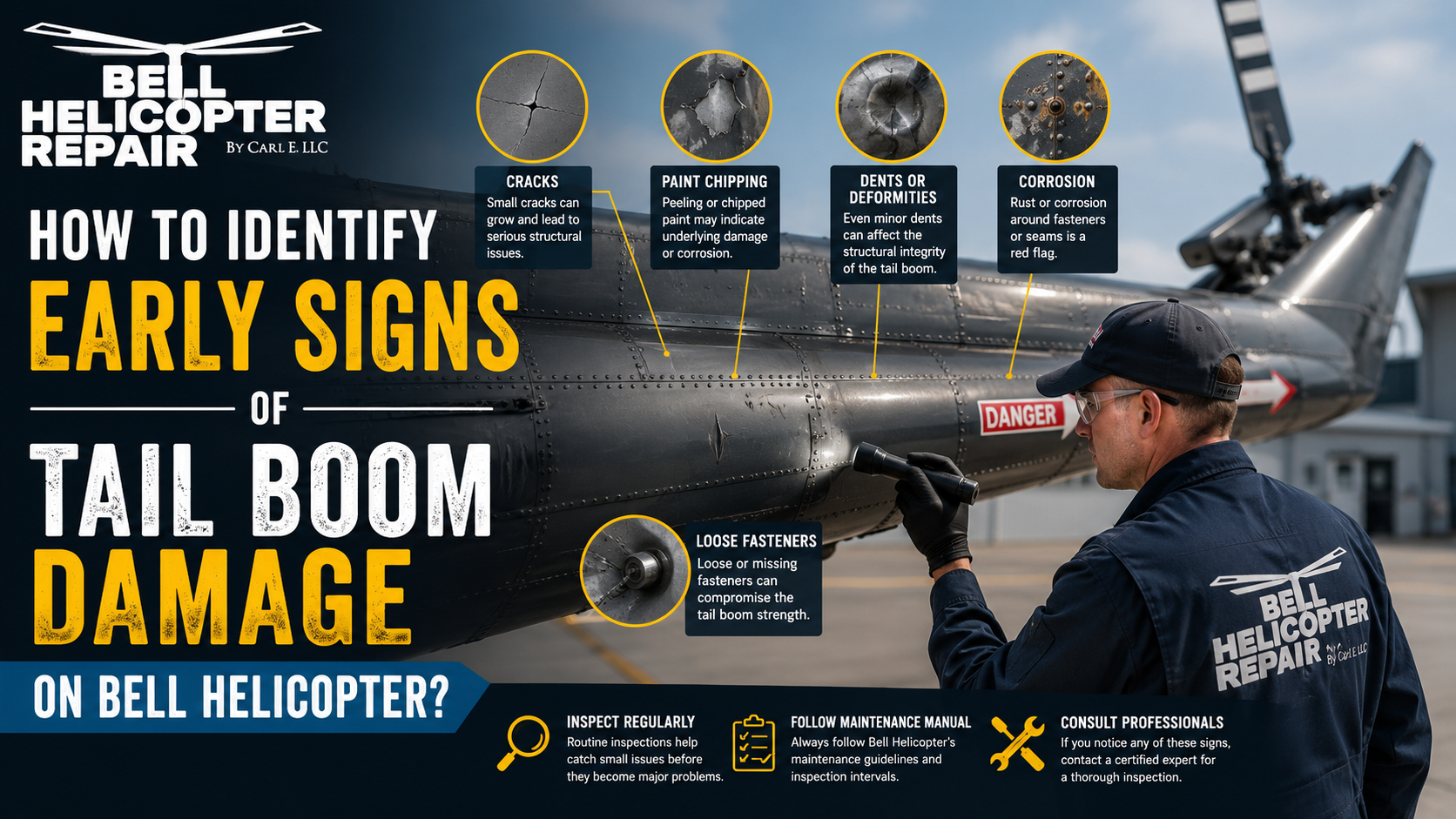
Summary: Tail boom damage often develops gradually and may remain unnoticed until it affects structural integrity or flight performance. Understanding early warning signs helps operators address issues before repairs become extensive. Regular inspections, attention to helicopter components, and timely aircraft corrosion repair support safe operations, reduce downtime, and help maintain airworthiness across Bell helicopter fleets.
Bell helicopters operate in demanding environments where vibration, environmental exposure, operational stress, and repeated flight cycles place continuous loads on structural assemblies. The tail boom is one such structure that is crucial for stability and in supporting the majority of flight systems.
This early detection of damage preserves the helicopter's components from further wear and helps operators avoid unexpected maintenance events. Structural issues are also a common problem, and they can be detected by small cracks, corrosion, loose fittings or skin deformity. By detecting these signs during regular maintenance checks, maintenance teams can take measures to prevent them from escalating into expensive repairs or replacements.
Understanding the Importance of the Tail Boom
The tail boom is a key structural part of the aircraft, extending from the fuselage to the tail rotor assembly. It is used in the control systems, electrical wiring, stabilisers and other circuits that are essential to flight.
The tail boom is always under aerodynamic force loading and vibrating, so it is vulnerable to fatigue damage with time. Moisture, salt, temperature fluctuations and contaminates can expedite deterioration.
The structural strength, flight stability and safety are affected by the damaged tail boom. For these reasons, the operators shall pay special attention in this zone when the scheduled maintenance is carried out.
Visible Cracks Around Structural Attachments
A crack is typically one of the first symptoms of a problem with the tail boom.
It is important for maintenance personnel to focus on the following:
● Stabiliser attachment points.
● Bulkhead connections.
● Tail boom fittings.
● Access panel corners.
● Any rating lines and fastening holes.
Vibration and cyclic loading produce stress concentrations around these regions, which are repeated. Cracks can start out as fine lines separating fasteners and/or structural joints.
Any type of cracking, even small ones, should be immediately assessed, as fatigue cracks tend to continue to grow over time under continuing working loads.
Inspect for Surface Corrosion
Humid, coastal, agricultural and industrial operating environments are known hazards for structures on the Bell helicopters, particularly related to corrosion.
Early signs include:
● Surface discolouration.
● White powder residue on aluminum structures.
● Paint blistering.
● Pitting around fasteners.
● Material exfoliation.
Corrosion can cause structural members to weaken and may affect load-bearing. When aircraft corrosion is detected, a timely repair for that corrosion helps to avoid the expansion of the corrosion process into larger areas of the structure.
Maintenance teams implement regular cleaning and inspection programmes to detect corrosion in its early stages, preventing serious damage.
Watch for Loose or Distorted Fasteners
Fasteners are used to transfer loads throughout the structure of the tail boom. When fastener conditions change, so does the overall structural movement, so often, we are told.
The evidence that inspectors should check consists of:
● Working rivets.
● Missing fasteners.
● Elongated holes.
● Loose hardware.
● Fastener head movement.
Usually structural fatigue is not seen as a crack until there is some behaviour of the fastener that is considered abnormal. Acting on these signs of danger early helps maintain the structural integrity and makes repairs simpler to perform.
Look for Skin Deformation and Buckling
The tail boom should be aesthetically pleasing with even skin panels.
Signs that should be explored further are:
● Dents.
● Wrinkling.
● Oil-canning.
● Bulging surfaces.
● Localised buckling.
These conditions can be the result of structural damage to wood or impact or fatigue to wood members under tension behind the surface.
Ridges, furrows, mounds, depressions, breaks, dirt castings, rubbish or any other unusual surface irregularities should never be overlooked by the inspector, even if they might seem minor.
Monitor Vibration Changes During Operation
Highly trained flight crews may have identified structural problems before damage may be seen and are likely to notice this first.
Patterns of vibration which are unusual can signal:
● Internal structural cracking.
● Loose components.
● Stabiliser damage.
● Problems with tail boom attachment.
● Imbalanced relationships in the system.
Pilots should report any changes in vibration characteristics immediately. The observations can be utilised by maintenance personnel in combination with the inspection data to help recognise developing issues.
Evaluate Stabilizer Condition Carefully
Stabilisers are essential to making the flight of the Bell helicopters predictable. The stabiliser support structures are often damaged, and their surrounding tail boom structures are often damaged.
Inspection areas include:
● Leading edges.
● Trailing edges.
● Support brackets.
● Attachment fittings.
● Skin-to-frame connections.
Any damage in such a site will have a different load path through the structure and could lead to increased fatigue in other zones adjacent to the damaged site.
Stabilisers are directly connected to some of the major parts of the helicopter, and, for this reason, they must always be carefully examined during each inspection.
Check for Evidence of Previous Repairs
The repair history is useful in determining which areas they may need more monitoring.
Inspectors should review:
● Repair documentation.
● Structural modifications.
● Doubler installations.
● Splice repairs.
● Replacement sections.
Older repair sites will have varying loads compared to the originals. These are areas of an aircraft that can be repaired, and if repaired in accordance with the procedure outlined above, they will again be airworthy; however, they are good candidates for ongoing check-ups during the aircraft's lifecycle.
Inspect Internal Structures Whenever Possible
Many tailboom problems can be traced to the inside before any visible exterior symptom is detected.
Where access is granted to maintenance personnel to investigate:
● Stringers.
● Frames.
● Bulkheads.
● Longerons.
● Internal fittings.
Internal inspections can be used to detect potential areas of corrosion, cracking or degradation of structure which may go unnoticed from an outside view.
The use of borescopes and inspection techniques allows access to confined structural areas, which helps to achieve more accurate observations.
Why Early Detection Matters?
Damage to the tail boom is typically easier to fix the sooner it is discovered, making it a time and cost-effective repair for the reasons outlined below:
● Reduces repair costs.
● Minimises aircraft downtime.
● Improves fleet reliability.
● Preserves structural integrity.
● Supports regulatory compliance.
● Enhances flight safety.
A small crack identified during routine maintenance often requires significantly less corrective action than a crack discovered after extensive propagation.
Regular maintenance checks continue to be one of the best ways of ensuring the safety of an aircraft's structure during its operational life.
Conclusion
Early signs of tail boom damage rarely appear without warning. Cracks, corrosion, loose fasteners, skin distortion, unusual vibration, and stabilizer-related concerns often provide valuable indicators of developing structural issues. By implementing thorough inspection programs and monitoring critical helicopter components, operators improve safety, reduce downtime, and extend aircraft service life.
If your Bell helicopter requires structural evaluation, tail boom repair, corrosion assessment, or component replacement, Bell Helicopter Repair provides experienced field support and specialized repair services across the United States.
Frequently Asked Questions
What causes tail boom damage in Bell helicopters?
Typical causes of tail boom damage include fatigue, vibration, environment, corrosion, accidental impact, and wear due to long-term operation.
What is the frequency of the inspection of a tail boom?
Operators should conduct aircraft maintenance on a regular basis as per OEM maintenance guidelines with extra checks where ailing aircraft fly in harsh conditions or undergo high flight hours.
Can corrosion lead to tail boom replacement?
Yes. If corrosion is severe, the structure could become structurally weaker, and parts may need to be replaced.
What are the first visible signs of tail boom fatigue?
Hairline cracks around fasteners, loose rivets, skin deformations and unusual vibration patterns are early signs of damage due to fatigue.
Why is early damage detection important?
By early identification, the amount of repairs, extent of downtime, maintenance expenses and aircraft safety could be reduced.
